
1. From project approval to site-level verification
Once a project has passed initial validation and is active on the platform, verification shifts from project-level assessment to planting-site level tracking.
Each planting site is defined through a Project Design Document (PDD), which becomes the core unit for:
-
Monitoring implementation
-
Tracking progress over time
-
Linking activities to measurable outcomes
This ensures verification is based on real, localized activity, not aggregated project assumptions.
2. Verification through structured events
Verification is not a one-time audit, but a series of verification events over time.
These events include:
-
Planting confirmation (including geo-tagged photos and planting evidence)
-
Progress updates from project partners
-
Remote sensing monitoring (e.g. EVI and other indicators)
-
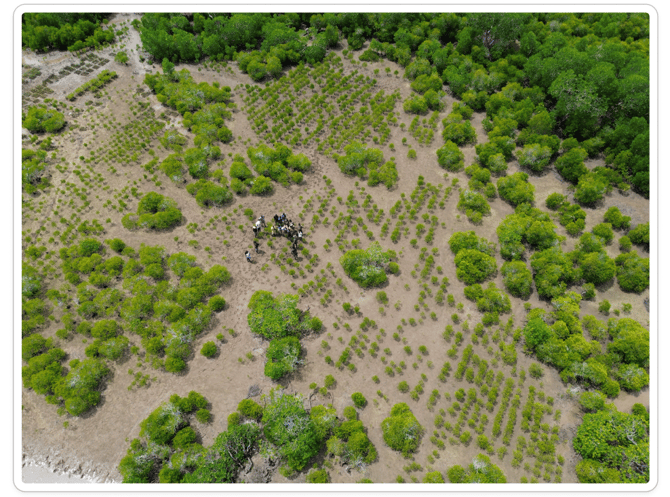
On-site verification visits where applicable
Each event contributes to building a continuous and traceable record of the project’s development.
3. Data-driven monitoring approach
Verification combines multiple data sources:
-
Remote sensing (e.g. EVI) to track vegetation development at scale
-
Project-reported data (planting, maintenance, updates)
-
On-site observations where needed
Where applicable, additional methodologies (e.g. Aboveground Carbon approaches) may provide more precise insights.
This allows Tree-Nation to monitor both:
-
ecosystem development over time
-
and project performance against expected outcomes
4. Verification Quality Score (VQS)
All verification inputs are aggregated into a Verification Quality Score (VQS).
The VQS reflects:
-
Consistency and completeness of reporting
-
Alignment with project expectations
-
Observed development over time
Projects must maintain a minimum VQS threshold to remain active.
5. Species selection oversight
As part of ongoing verification, Tree-Nation reviews species selection at the planting-site level.
-
Non-native or potentially invasive species must be explicitly justified
-
Compatibility with local ecosystems is assessed continuously
-
Adjustments may be required if risks are identified
This ensures that implementation remains aligned with both project goals and ecological integrity.
6. On-site verification
On-site visits are conducted where needed to:
-
Validate reported data
-
Assess real conditions on the ground
-
Resolve discrepancies between reported and observed outcomes
These visits complement digital monitoring and strengthen overall system reliability.
In summary
Tree-Nation’s verification system is built on:
-
Site-level tracking through PDDs
-
Continuous verification events over time
-
Combination of remote sensing, reporting, and on-site checks
This ensures that projects are not only approved correctly, but also continuously verified based on real-world performance.